Introduction:
Preparing for CUET Agriculture 2026 feels confusing at first.
The syllabus looks short. The questions feel tricky.
And most students are not sure what to study and how deep to go.
This guide is written for beginners who want a clear, step-by-step roadmap without pressure or shortcuts.
What Is CUET Agriculture?
CUET Agriculture is an entrance exam for admission into undergraduate agriculture courses offered by central and participating universities in India.
The exam checks whether you understand basic agriculture concepts, not whether you can memorize notes.
Most questions come from:
Soil science
Agronomy
Basic plant biology
Agriculture-related NCERT concepts
Why Many Students Struggle in CUET Agriculture?
Students usually fail not because they are weak, but because:
They memorize instead of understanding
They read NCERT without agriculture context
Soil science formulas are learned without logic
No clear study sequence is followed
Revision is irregular
CUET rewards concept clarity, not guesswork.
CUET Agriculture Exam Pattern (Simple Explanation)
The exam tests:
Concept-based multiple-choice questions
NCERT-linked agriculture topics
Logical application, not long calculations
If you understand the reason behind answers, you can score well even with limited time.
CUET Agriculture Syllabus Overview
You don’t need to study everything equally.
Focus on these areas first:
1. Soil Science
Soil pH and crop suitability
Plant nutrients and deficiency symptoms
Soil types and fertility
Basic soil chemistry
2. Agronomy
Cropping systems
Irrigation principles
Crop seasons and rotations
Yield-related concepts
3. Plant Biology (NCERT-based)
Photosynthesis basics
Plant nutrition
Growth and development
Soil science and agronomy together decide a large part of your rank.
How to Prepare for CUET Agriculture (Step-by-Step)
Step 1: Build Concepts First
Start with understanding:
Why soil pH matters
How nutrients affect crops
How irrigation works
Do not start with MCQs on Day 1.
Step 2: Read NCERT with Agriculture Angle
NCERT biology is important, but read it by asking:
How does this apply to crops
How does this affect farming
Why is this important in agriculture
This mindset changes everything.
Step 3: Practice MCQs After Concepts
Once concepts are clear:
Attempt chapter-wise MCQs
Focus on wrong answers
Learn why options are incorrect
MCQs are tools, not teachers.
Step 4: Revise Weekly
Every week:
Revise soil science basics
Revisit agronomy concepts
Solve a small set of mixed questions
Consistency beats long study hours.
CUET Agriculture Study Plan for Beginners (6 Months)
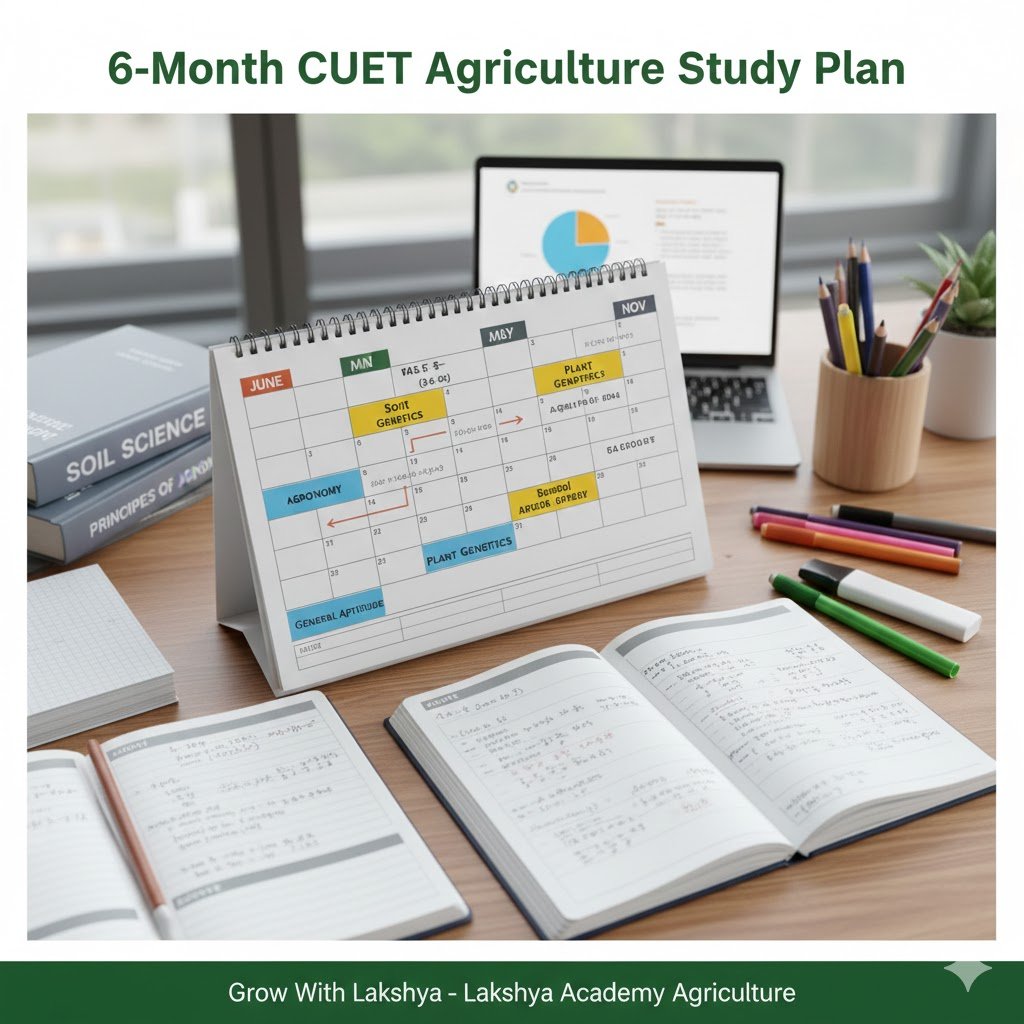
Months 1–2
Soil science fundamentals
NCERT plant biology basics
Months 3–4
Agronomy concepts
Irrigation and cropping systems
Start MCQ practice
Months 5–6
Full syllabus revision
Previous pattern questions
Weak area improvement
Six months is enough if your direction is right.
Why Soil Science Is So Important in CUET Agriculture?
Soil science questions:
Are concept-based
Repeat ideas in different forms
Test understanding, not memory
Students who understand soil science usually score higher than those who skip it.
If soil concepts are strong, half the exam feels easier.
Can Beginners Crack CUET Agriculture?
Yes.
Many students crack CUET Agriculture without a farming background.
What matters is:
Clear basics
Proper sequence
Regular revision
Background does not decide rank. Preparation quality does.
Common Mistakes to Avoid
Studying only MCQs
Ignoring soil science
Skipping revision
Studying randomly
Comparing with others
Focus on your clarity, not speed.

How Coaching Helps in CUET Agriculture Preparation?
Good coaching helps by:
Explaining concepts in simple language
Connecting theory with agriculture logic
Saving time on confusion
Giving exam-focused direction
If you feel stuck or lost, guidance can make preparation smoother.
You can explore CUET agriculture coaching with a concept-focused approach here:
CUET & ICAR Agriculture Coaching
Final Advice for CUET Aspirants
CUET Agriculture is not about hard work alone.
It is about clear thinking.
Understand first.
Practice next.
Revise regularly.
That’s how ranks improve.
FAQs: CUET Agriculture Preparation (Beginner Level)
1. How should a beginner start CUET Agriculture preparation in 2026?
A beginner should start by understanding basic soil science and agronomy concepts before solving MCQs. Clear concepts make later revision and practice easier.
2. Is NCERT enough for CUET Agriculture?
NCERT is important, but it should be studied with agriculture context. Concepts from NCERT biology need to be connected with soil, crops, and farming logic.
3. Can CUET Agriculture be prepared without coaching?
Yes, CUET Agriculture can be prepared without coaching if concepts are clear and study is structured. Coaching helps reduce confusion and saves time.
4. Which topic should I study first for CUET Agriculture?
Soil science should be studied first because it forms the base of many agriculture questions and has high weightage in the exam.